WHEN THE BODY LOSES ITS FITRAH
You may have spent years caring for everyone around you — your family, your work, your responsibilities and the people who depend on you. In the name of love and responsibility, it is easy to give away pieces of yourself quietly: your sleep, your time, your energy and sometimes even the attention your own health has been asking for. We rarely notice it happening. Life simply becomes full. Until health changes — and suddenly the ordinary things feel precious again: waking with energy, sleeping peacefully, enjoying a meal, walking without discomfort or making plans without fear.
Cancer makes this truth especially profound. It may begin with abnormal cells and tissues, but its impact rarely stays there. It can change the rhythm of a family, disturb sleep, reshape emotions, challenge confidence and alter the way a person imagines tomorrow. The medical condition may be located in the body, but the experience belongs to the whole human being. Yet illness does not diminish human worth. A person living with skin cancer remains worthy of tenderness, dignity, attention and care. Sometimes, after years of listening to everyone else, illness reminds us to begin listening inward — to our own bodies, too.
Skin cancer can feel especially visible. A change on the surface of the body may become something a person sees repeatedly in the mirror, feels when getting dressed or worries about when meeting other people. A person living with skin cancer remains worthy of tenderness, dignity, attention and care.
This leads us to a deeper question: What happens when the natural order that helps the body maintain balance begins to change?
At Ibnu Sina Wellness, this is where we begin looking beyond a single lesion or diagnosis. We model the fundamentals of Ibnu Sina’s medical philosophy through a contemporary whole-person framework that considers the BODY-HEART-MIND-SOUL. [1] The body is not a collection of isolated parts. The human body functions as one connected living system, connected to the environment and way of life.
BUT WHY DOES CANCER OCCUR?
After a cancer diagnosis, one question can become difficult to escape: “Why did this happen?”
Cancer is a complex group of diseases in which abnormal cells can grow beyond their usual boundaries and, in some cancers, invade surrounding tissues or spread to other parts of the body. Cancer develops through interactions between cellular changes and multiple biological, environmental and lifestyle influences. [2] But cells do not live in isolation. Cells also exist within biological environments. They interact with neighbouring cells, blood vessels, immune cells, signalling molecules and the extracellular matrix surrounding them. Inflammation is one example. It is normally part of the body’s protective response. But when inflammatory activity remains active over a prolonged period, it can contribute to tissue dysfunction and biological processes associated with long-term disease, including cancer. [4]
This gives us a more useful way to think about cancer. Cancer is not simply a lump that suddenly appeared. It is a complex disease occurring within an equally complex human body.
And therefore we ask: How do we understand the condition of the whole system rather than looking only at the place where the disease becomes visible?

WHAT MAKES SKIN CANCER DIFFERENT?
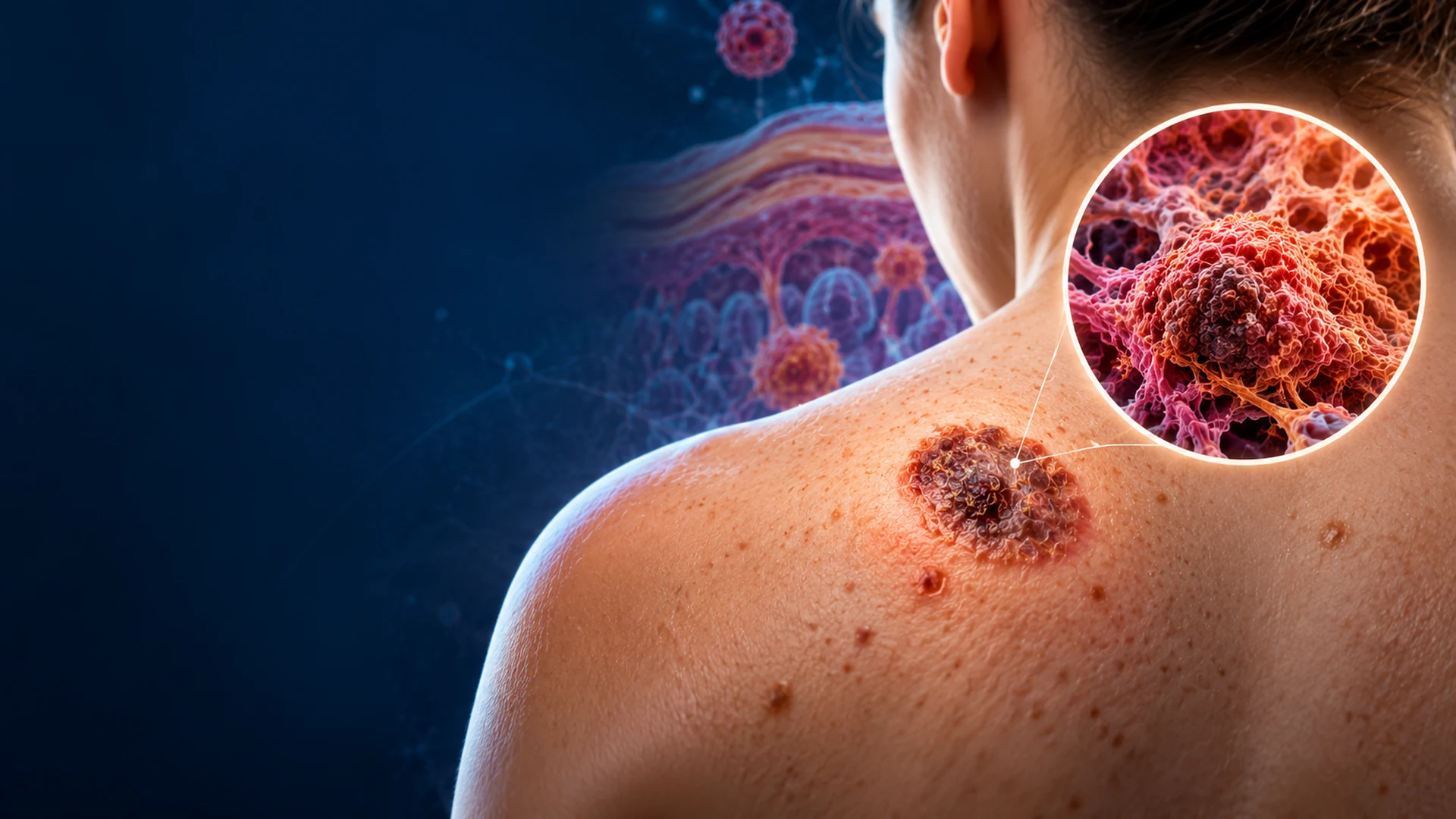
Skin cancer is not one single disease. The major groups include basal cell carcinoma, or BCC; cutaneous squamous cell carcinoma, or cSCC; and cutaneous melanoma. These cancers arise from different skin cells and can differ substantially in frequency, biological behaviour, risk of recurrence, ability to spread and treatment. [3] BCC and cSCC are commonly grouped as keratinocyte cancers. BCC is the most frequently diagnosed form of skin cancer in many populations and usually behaves differently from cSCC and melanoma. cSCC is another common keratinocyte malignancy; although most cases can be successfully treated, a smaller high-risk group can recur or metastasise. [3] [5]
Cutaneous melanoma is biologically different. It arises from melanocytes, the pigment-producing cells of the skin, and has its own patterns of diagnosis, staging and management. [3] [7] This is why the term “skin cancer” alone does not tell us everything. The exact type matters. The tumour’s location matters. Its pathological characteristics and stage matter. And the clinical context of the person matters. Because many skin cancers develop at the body’s surface, visible change can sometimes provide an opportunity for earlier recognition. Depending on the tumour type, concerning changes can include a new or changing lesion, a sore that does not heal, recurrent bleeding or crusting, a persistent scaly or raised area, or a pigmented lesion that changes in size, shape, colour or appearance. [3] [5] [7]
These changes do not automatically mean cancer. Many benign skin conditions can produce lumps, pigmentation, scaling, irritation or sores. But a persistent, changing or unexplained skin lesion deserves appropriate medical assessment. Suspicious lesions may require clinical examination and biopsy because visual appearance alone cannot reliably establish the exact diagnosis. For melanoma in particular, appropriate biopsy and pathological assessment are central to establishing tumour characteristics and guiding management. [7] Understanding these disease-specific differences matters. But the skin still belongs to a living person whose physical health, emotions, thoughts, relationships, responsibilities and spiritual wellbeing continue alongside the diagnosis.
The tumour matters. But so does the person living through everything around it.
WHAT DID IBNU SINA UNDERSTAND ABOUT HEALTH AND DISEASE?
Ibnu Sina — also known as Avicenna — wrote more than 450 books including Al-Qanun fi al-Tibb, or The Canon of Medicine. His medical writings reflected the knowledge and medical framework beyond his historical period, including the humoral theory — a model that explained health through the balance of bodily humours or fluids. [8] An important principle within Ibnu Sina’s medical reasoning remains deeply relevant to the philosophy of Ibnu Sina Wellness: do not understand one part of ailment without understanding the condition of the whole person. [1] At Ibnu Sina Wellness, we have taken inspiration from this whole-person orientation and developed it into a contemporary framework.
The disease may appear in one part of the body, but the person experiencing it is always more than that one part.
IBNU SINA WELLNESS — MODELING THE FUNDAMENTALS OF IBNU SINA MEDICINE
Ibnu Sina Wellness was established in 2015 in Kajang, Selangor, Malaysia. Since then, our work has focused on bringing whole-person principles into a structured wellness model. We have served people from Malaysia, Singapore, Indonesia and Brunei, including people living with complex and long-standing health challenges.
Through that experience, one principle has remained central to our philosophy: We do not reduce a person to a diagnosis. We want to understand the whole human being.
THE BPS-S LENS VIEWS THE PERSON BEHIND THE DIAGNOSIS
This is where the Biopsychosocial-Spiritual, or BPS-S, framework becomes especially important. BPS-S recognises that human health and illness are experienced across interconnected biological, psychological, social and spiritual dimensions. These dimensions do not exist as separate compartments. They belong to one human life. [1] For someone living with skin cancer, the biological dimension includes the exact cancer type, tumour location, symptoms, pathology, treatment, wound healing, skin function, sleep, nutrition and recovery needs. The psychological dimension may include fear, uncertainty, anxiety about recurrence or spread, distress about visible changes or scars and concern about treatment.
The social dimension may include family responsibilities, work, treatment appointments, finances, social confidence and changes in everyday activities. The spiritual dimension includes meaning, hope, purpose, relationship with Allah and the way a person understands illness within the wider journey of life. These dimensions interact. A visible tumour or surgical scar can affect confidence. Repeated procedures can influence daily routines. Wound care, bleeding, itching or treatment effects may disturb comfort and sleep. Fear of recurrence can remain even after treatment has finished. Whole-person care therefore creates space to understand not only the biological condition, but also what the person is carrying emotionally, socially and spiritually. [9]
A systematic review of patient-reported outcome measures in advanced skin cancer identified important quality-of-life concerns, including symptom and treatment burdens and issues specific to advanced or visible skin disease. [10] This evidence relates to advanced melanoma and advanced non-melanoma skin cancer and should not automatically be generalised to every person with an early, low-risk skin cancer. A diagnosis tells us what disease is present. It does not tell us everything the person is carrying. To care for the person well, we must first learn to see the person as a whole.
AT IBNU SINA WELLNESS, WE DO NOT LOOK AT ONLY ONE DISEASE
When someone comes to us with skin cancer, we do not want to see only the words written on a pathology report. We want to see: THE WHOLE PERSON.
Within the Ibnu Sina Wellness functional framework, body functions are mapped across:
12 MAJOR BODY SYSTEMS
and
120 MICRO-SYSTEMS.
The 120 Micro-Systems are an Ibnu Sina Wellness functional framework. They give our practitioners and educators a more detailed way of asking: “Where is the body’s function giving us a signal?” Instead of seeing one lesion on one part of the skin, we look at the interconnected network supporting the person.

THE 12 SYSTEMS ARE NOT 12 SEPARATE MACHINES
The human body is made up of systems with different responsibilities, but they do not function like twelve separate machines. The nervous system communicates and coordinates. The endocrine system regulates through hormones. The cardiovascular system circulates blood, oxygen and nutrients, while the respiratory system performs the essential exchange of gases. The digestive system processes and absorbs what we eat, the liver carries out vital metabolic and processing functions, and the urinary system regulates fluids while eliminating metabolic waste. [11]
The same interdependence continues throughout the body. The immune system protects and monitors, the lymphatic system supports immune function and fluid balance, the musculoskeletal system provides structure and movement, the integumentary system — the skin, hair, nails and associated structures — protects the body while interacting with the external environment, and the reproductive system carries reproductive and hormonal functions. [11] The skin belongs to the integumentary system, but it does not function in isolation. The skin forms an important barrier between the internal body and the external environment. It participates in protection, sensation and temperature regulation and contains blood vessels, nerves, connective tissues and specialised cells. [11]
It also interacts with immune processes and with the circulation that supplies its tissues. The nervous system allows the skin to detect touch, pressure, pain and temperature. The cardiovascular system supplies oxygen and nutrients. Immune cells participate in surveillance and response. The endocrine and metabolic environment can influence many aspects of normal tissue function. [11] The skin is therefore not simply an outer covering. It belongs to a wider biological network. But none of these systems operates independently. Hormones travel through the circulation. The lungs and cardiovascular system work together to deliver oxygen. The kidneys regulate fluids and electrolytes. The nervous and endocrine systems coordinate countless processes throughout the body. [11]
The body works through connection. And that is why understanding one part often requires us to look at the system surrounding it.
THE 120 MICRO-SYSTEMS AS CHECKPOINTS
This is where our 120 Micro-Systems become particularly important. Rather than beginning only with the question, “What disease do you have?”, we begin by looking more closely at the signals the body is giving us. Which system is signalling that something has changed? Which micro-system may be involved? What function is being affected? What may be disturbing that function? And what root-cause factors may need to be explored?
This creates a pathway for deeper investigation:
Symptom → System → Micro-System → Function → Imbalance → Root-Cause Factors → Restoration of Balance
The purpose is to move beyond naming the symptom and stopping there. A symptom can tell us where to begin looking, but it does not necessarily tell us the whole story. The symptom is not the end of the investigation. It is the beginning.
WHY THE MICRO-SYSTEM CANNOT BE SEPARATED FROM THE WHOLE PERSON
There is another principle that is essential: a micro-system does not exist separately from the life of the person experiencing the problem. A biological function may be under strain, while the same person may also be experiencing fear, anxiety, grief, anger, uncertainty, disturbed sleep, changes in relationships, loss of confidence, caregiving demands or spiritual distress. The BPS-S perspective helps us understand how these dimensions exist within the same life. What happens in the body is experienced by a person who also has emotions, thoughts, relationships, responsibilities and a spiritual life. [1]
So when we say “we look at the micro-system,” we are not looking only at biology. We are also asking what is happening emotionally and mentally, what is happening within relationships and circumstances, and what is happening within the spiritual dimension of life. Because these are not separate human beings. They are dimensions of one human life. And that is why understanding the micro-system must always lead us back to understanding the whole person.
THE MICRO-SYSTEM IS A BIOLOGICAL CHECKPOINT — BUT THE PERSON IS MORE THAN BIOLOGY
Imagine a city. You cannot understand its condition by looking at one building alone. Roads, water systems, electricity, communication networks, transportation, waste management, security and emergency services all depend upon smaller functions working together. The human body is far more complex. Every major system contains specialised functions, and those functions continuously interact with others. But the human being adds another layer: the person living inside that body has emotions, thoughts, relationships, memories, responsibilities, values and a spiritual life. [9] The skin similarly interacts continuously with nerves, circulation, immune cells and the external environment. When skin cancer develops, the biological lesion is real.
The physical condition is real. But so is the person experiencing it. A biological checkpoint can help us understand what is happening within the body, but it can never describe the whole human being.
WHAT DOES “TOXIC BURDEN” MEAN AT IBNU SINA WELLNESS?
One of the concepts we investigate at Ibnu Sina Wellness is toxic burden. This can include harmful exposures associated with cancer risk, such as tobacco smoke, alcohol, air pollution, ultraviolet and ionising radiation, cancer-causing infections and particular occupational or environmental carcinogens. [2] [12] We also look at the wider metabolic and lifestyle environment surrounding the individual. Excess body weight, physical inactivity and patterns of nutrition are among the modifiable factors studied in relation to cancer risk, while chronic inflammation forms part of the wider biological environment relevant to disease. [4] [12]
Sleep and prolonged stress matter here for a different but equally human reason. They shape the way a person functions, copes and moves through illness, and therefore belong within the wider whole-person picture. [1] [10] This can include harmful exposures associated with cancer risk generally, such as tobacco smoke, alcohol, air pollution, ultraviolet and ionising radiation, cancer-causing infections and particular occupational or environmental carcinogens. [2] [12]
For skin cancer, however, one exposure has particularly strong disease-specific importance: ultraviolet radiation. Ultraviolet radiation from sunlight and artificial tanning sources is an established major risk factor for many skin cancers. Its contribution varies by cancer type, pattern of exposure, skin phenotype and population. [6] [13] In fair-skinned populations, a very large proportion of keratinocyte cancers and cutaneous melanomas has been attributed to ultraviolet radiation. These estimates should not automatically be transferred to every population because skin phenotype, geographical exposure patterns and other risk factors differ. [6] Risk also extends beyond UV alone.
Modern risk assessment for melanoma, BCC and cSCC includes different combinations of intrinsic and extrinsic factors, including skin phenotype, age, personal history, number and characteristics of naevi in melanoma risk, immune suppression in relevant contexts, genetic susceptibility and patterns of ultraviolet exposure. The importance of each factor differs between the three cancers. [13] This distinction matters. A melanoma risk factor should not automatically be described as equally important for BCC or cSCC. Likewise, having one or more risk factors does not mean a person will inevitably develop skin cancer. We also consider the wider metabolic and lifestyle environment because nutrition, movement, sleep and other health behaviours affect overall wellbeing. But these broader health factors should not be presented as established causes of a particular skin cancer without disease-specific evidence.
Stress and emotional burden matter for wellbeing and coping, but they should not be presented as proven causes of melanoma, BCC or cSCC. [1] Toxic burden is therefore not one mysterious substance or one universal explanation for cancer. It is a way of examining potentially harmful exposures and modifiable burdens while keeping established skin-cancer risk factors, wider health factors and the lived experience of illness scientifically distinct. At Ibnu Sina Wellness, we bring these pieces together to understand the wider pattern of exposures, physiological demands and modifiable burdens surrounding the person.
The body does not experience life as a list of separate risk factors. It experiences the pattern created by them over time. Toxic burden is therefore not one substance. It is the cumulative pattern of what the body has repeatedly been asked to process, tolerate and adapt to over time.
THE BIOLOGICAL BURDEN AND THE EMOTIONAL-MENTAL-SOUL BURDEN
A person may carry biological burdens while also carrying grief, fear, anger, betrayal, loneliness or unresolved emotional pain. The mind can carry its own burden too — constant worrying, overthinking, perfectionism, self-criticism, uncertainty or feeling that one must always remain strong. Daily life may add another layer through caregiving responsibilities, financial pressure, relationship conflict, work demands and long periods of uncertainty. There is also the spiritual dimension. A person may struggle with meaning, hope, spiritual connection, trust in Allah or the feeling that life has lost its direction. Spiritual distress has also been described among people living with cancer. [15]
A person may carry biological burdens alongside fear, grief, loneliness, uncertainty, overthinking, self-criticism, caregiving demands, financial pressure or relationship strain. Skin cancer can create its own emotional challenges. A person may worry about whether a lesion has spread, whether another cancer will develop, how surgery may change appearance, whether a scar will be visible or whether repeated treatment will interrupt work and family life. Advanced skin cancers may also bring symptom and treatment burdens that directly affect quality of life. [10] These experiences matter. But they should not be presented as biological causes of the cancer.
There is also the spiritual dimension. A person may struggle with meaning, hope, spiritual connection or trust in Allah. Spiritual distress has been described among people living with cancer. [15] These experiences can shape how a person lives through illness, but they do not establish why skin cancer developed. This is why the BPS-S perspective matters. The biology matters. But so do the heart, the mind, the life surrounding the person, and the soul.
OVERHAUL BODY™ — SUPPORTS THE WHOLE SYSTEM
This is where Overhaul Body™ fits into the Ibnu Sina Wellness philosophy. Overhaul Body™ is designed as a whole-person journey that looks beyond the tumour to the wider person and the interconnected systems supporting them. Ibnu Sina Wellness offers a new era in cancer healthcare — without chemotherapy, without surgery, without radiation, and without machine-based treatment. Within ISW, its Recovery Plan is structured around 15 integrated methods spanning herbal medicine, mind, natural lifestyle and spiritual care. This reflects the wider Ibnu Sina Wellness whole-person philosophy, which brings together the body, heart, mind and soul and incorporates approaches such as herbal remedies, natural lifestyle practices, nutrition and spiritual care. [1]
This wider supportive view also aligns with the field of integrative oncology, where supportive approaches may be considered alongside cancer-directed care. [17] Within the ISW framework, support begins by strengthening foundations such as nutrition, appropriate movement, bowel movement, sleep, rest and recovery, emotional wellbeing, mental wellbeing and spiritual wellbeing. This describes the Ibnu Sina Wellness supportive whole-person programme. It should not be interpreted as evidence that a wellness programme replaces medically indicated diagnosis or treatment for melanoma, BCC, cSCC or another skin malignancy. Appropriate skin-cancer management depends on the exact diagnosis, tumour characteristics, anatomical location and disease extent.
For most cSCCs, removal of the primary tumour is highly effective, while higher-risk or advanced disease may require additional specialist management. [5] For cutaneous melanoma, appropriate biopsy, pathological assessment and tumour characteristics such as Breslow thickness help guide subsequent management. Surgery remains central to the management of primary cutaneous melanoma, while selected higher-risk or advanced cases may require additional oncological treatment. [7] BCC follows its own clinical pathway and should not simply be managed as though it were cSCC or melanoma. This is why accurate diagnosis and specialist dermatological or oncological assessment matter.
Tissue repair involves coordinated interactions among cells, signalling molecules and the extracellular matrix as damaged tissues move towards restoration. [16] These are normal biological processes. Normal physiology itself depends on ongoing processes of regulation and repair. Homeostasis describes the body’s continuous regulation of its internal environment. [11] Tissue repair involves coordinated interactions among cells, signalling molecules and the extracellular matrix as damaged tissue moves towards restoration. [16]
These processes remind us of something important: The body is constantly working to regulate, communicate and repair. Our role is to support the person living within that body. And ultimately, the aim of Overhaul Body™ is to support the whole person.
We support the body.
We support the person.
And we leave healing ultimately to Allah.
WHAT DOES “UNLOAD” MEAN?
When we say Overhaul Body™ aims to unload harmful burdens, we mean addressing factors that can reasonably be changed. This may include reducing avoidable harmful exposures, improving nutrition, supporting bowel movement and normal elimination, improving sleep, encouraging appropriate movement, creating space for rest and recovery and addressing emotional, mental and spiritual burdens. For skin health, this includes recognising avoidable harmful exposures where appropriate. Reducing excessive ultraviolet exposure is especially relevant because UV is an established preventable contributor to many skin cancers. Evidence-based photoprotection can include seeking shade, protective clothing and appropriate use of broad-spectrum sunscreen according to individual circumstances and UV conditions. Deliberate tanning and artificial tanning exposure increase unnecessary UV burden. [6]
The wider whole-person approach may also include improving nutrition, sleep, recovery and appropriate physical activity and addressing emotional, mental and spiritual burdens. For someone with skin cancer, however, unloading does not mean claiming that removing lifestyle burdens will remove malignant cells or replace appropriate treatment. Cancer-directed medical care addresses the malignancy itself.
Sometimes support begins not by adding more, but by asking: What can reasonably be reduced?
Because our framework contains 120 Micro-Systems, we can then ask more focused questions: Which functions need attention? Which systems are under strain? Which burdens may be modifiable? What does this person need biologically, psychologically, socially and spiritually? Unloading, in this sense, is about making room for the body and the person to function with less unnecessary burden.
BUT WHAT ABOUT THE CANCER CELL?
Cancer cells involve complex biological changes. They may grow abnormally, escape normal growth controls, interact with surrounding tissue and, in some cancers, invade nearby tissue or spread to other parts of the body. [2] [3] Skin cancer biology differs substantially between tumour types. BCC, cSCC and melanoma arise through different cellular and molecular pathways and should not be treated as though they share one biological mechanism. [3] [5] [7] The tumour microenvironment adds another layer. Cancer cells exist alongside immune cells, stromal cells, blood vessels and signalling networks that can influence tumour behaviour and immune responses.
Recent single-cell research examining BCC, cSCC, cutaneous melanoma and acral melanoma has demonstrated substantial differences in tumour-immune ecosystems across skin-cancer types and stages. [14] For example, different macrophage states, T-cell environments and immune-evasion patterns were observed across these cancers. The study also identified changes in immune ecotypes as some tumours progressed. [14] These findings strengthen our understanding that even cancers arising in the same organ can exist within very different biological environments. But this evidence also requires caution. Single-cell findings and emerging molecular targets are important research discoveries. They should not automatically be interpreted as established treatment benefits for every patient.
The tumour microenvironment of melanoma should not automatically be treated as identical to that of BCC or cSCC. Within the ISW framework, Overhaul Body™ focuses on supporting the person and the interconnected systems around that biological challenge. [1] This biology remains important within whole-person care. Within the ISW framework, Overhaul Body™ focuses on supporting the person and the interconnected systems surrounding that biological challenge, while strengthening modifiable foundations across the wider health journey. [1] The cancer cell remains important. But it is not the whole story.
THE LAW OF FITRAH
At Ibnu Sina Wellness, we describe this wider natural order through Fitrah. Fitrah refers to the natural disposition and order created by Allah. Within the ISW BPS-S model, this provides a wider spiritual lens through which health, balance and the human being are understood. [1] At the biological level, the body demonstrates remarkable processes of regulation and repair. When tissues are injured, repair involves coordinated interactions among cells, signalling molecules and the extracellular matrix — the structural material surrounding cells — as the tissue works towards restoration. [16] The body also continuously regulates temperature, blood glucose, fluid and electrolyte balance, acidity and many other internal conditions.
Physiology describes this maintenance of internal stability as homeostasis — the body’s ability to maintain an internal environment compatible with normal function despite changing conditions. [11] At the biological level, the skin demonstrates remarkable organisation. It provides a physical barrier while participating in sensation, temperature regulation and protection from the external environment. Its cells, nerves, vessels and supporting tissues function together as part of the body’s wider physiology. [11] When tissue is injured, repair involves coordinated interactions among cells, signalling molecules and the extracellular matrix. [16] These are biological processes.
Within the ISW framework, Fitrah gives this natural order a wider meaning. It invites us to recognise that the human body is not merely a machine. It is a living system created with extraordinary organisation by the Almighty Creator. Our responsibility is to support that order as best we can.
THE WHOLE PERSON — NOT ONLY THE CANCER
This brings us to one of the most important principles at Ibnu Sina Wellness: We do not only look at the disease.
We look at the body — the physical body and its systems.
We look at the heart — emotional wellbeing and the experiences carried within us.
We look at the mind — thoughts, perceptions, beliefs and patterns of thinking.
And we look at the soul — meaning, purpose, relationship with Allah and spiritual wellbeing.
At the same time, the BPS-S lens reminds us to understand the biological, psychological, social and spiritual dimensions together. [1] Within the body, we look across the 12 body systems and the 120 Micro-Systems as functional checkpoints. This gives us a much richer question than simply asking: “What disease do you have?”
We ask: What is your body telling us? Which system is giving the signal? Which functional micro-system may be involved? What is affecting its function? What biological burdens are present? What emotional and mental burdens are present? What is happening in the person’s relationships and circumstances? What is happening in the person’s life and soul?
And ultimately: What do we need to understand about the whole you?

COME AND HEAL “ALL” PARTS OF YOU
If you are living with skin cancer and do not know what to do, if you have completed treatment and are living with fear that it may return, or if a persistent sore, new lesion or changing area of skin is worrying you, perhaps what you need is a place where people see more than the diagnosis. Come and speak with our professionals. At Ibnu Sina Wellness, established in 2015 in Kajang, Selangor, we welcome you as a whole person. Our multidisciplinary team includes Hakeema, Hakeem, medical doctors, nutrition professionals, physiotherapists and counsellors, working within the broader whole-person philosophy of Ibnu Sina Wellness.
We want to understand your history, your body, your systems and your 120 functional Micro-Systems. We want to understand your nutrition, movement, bowel movement and sleep, as well as your emotional wellbeing, mental patterns, life circumstances and spiritual wellbeing. We want to understand the person behind the diagnosis. Because what you need now is not another person simply telling you what is wrong with you.
We will sit with you to understand the whole you and ask:
What has happened to you?
What is your body telling us?
Which systems need attention?
Which burdens can we reduce?
How can we support your 120 Micro-Systems?
And how can we help you move towards greater balance and Fitrah?
For a consultation, kindly call Ibnu Sina Wellness at 03-604 30663. You may also join Ibnu Sina Wellness Official on TikTok LIVE for general guidance and transform your perspective on daily life issues. You deserve to be cared for as a whole human being. You deserve compassion, dignity and the opportunity to be heard. And you deserve support for the body, heart, mind and soul that have carried you this far. May Allah grant you wellbeing, strengthen your body, calm your heart, illuminate your mind, strengthen your soul and guide you towards what is best for you.
HAKEEMA ROZAINAH
Founder & CEO of Ibnu Sina Wellness
Registered Practitioner with Ministry of Health Malaysia (Act 775 Traditional and Complementary Medicine)
Pioneer of WHO’s Biopsychosocial- spiritual medicine in Malaysia
Specializing in Ibn Sina Medicine, with a focus on herbal therapy for cancer management
Understanding the Whole Person. Discovering the Root. Supporting the Systems. Caring for the 120 Micro-Systems. Returning Towards Fitrah.
REFERENCES
1. Hakeema Rozainah, & Prof. Dato Sri Dr. Abu Hassan Asaari. (2025). Biopsychosocial-Spiritual: A New Era in Healthcare. ISW Media Sdn. Bhd.
2. World Health Organization. (2023). Cancer fact sheets.
3. Roky AH, Islam MM, Ahasan AMF, Mostaq MS, Mahmud MZ, Amin MN, Mahmud MA. Overview of skin cancer types and prevalence rates across continents. Cancer Pathogenesis and Therapy. 2025;3(2):89–100. doi:10.1016/j.cpt.2024.08.002.
4. Furman D, Campisi J, Verdin E, et al. Chronic inflammation in the etiology of disease across the life span. Nature Medicine. 2019;25(12):1822–1832. doi:10.1038/s41591-019-0675-0.
5. Jiang R, Fritz M, Que SKT. Cutaneous Squamous Cell Carcinoma: An Updated Review. Cancers (Basel). 2024;16(10):1800. doi:10.3390/cancers16101800.
6. Garbe C, Forsea A-M, Amaral T, et al. Skin cancers are the most frequent cancers in fair-skinned populations, but we can prevent them. European Journal of Cancer. 2024;204:114074. doi:10.1016/j.ejca.2024.114074.
7. Dixon AJ, Sladden M, Zouboulis CC, et al. Primary Cutaneous Melanoma—Management in 2024. Journal of Clinical Medicine. 2024;13(6):1607. doi:10.3390/jcm13061607.
8. Retsas S. Perceptions of Cancer Through the Ages—From Hippocratic Oncology to Precision Cancer Medicine. Biomolecules. 2024;14(11):1383. doi:10.3390/biom14111383.
9. Lynch JM, van Driel M, Meredith P, Stange KC, Getz L, Reeve J, Miller WL, Dowrick C. The Craft of Generalism: Clinical skills and attitudes for whole person care. Journal of Evaluation in Clinical Practice. 2022;28(6):1187–1194. doi:10.1111/jep.13624.
10. Reinhardt ME, Sun T, Pan CX, Schmults CD, Lee EH, Waldman AB. A systematic review of patient-reported outcome measures for advanced skin cancer patients. Archives of Dermatological Research. 2023;315(6):1473–1480. doi:10.1007/s00403-022-02479-0.
11. Hall JE, Hall ME. Guyton and Hall Textbook of Medical Physiology. 14th ed. Elsevier; 2021.
12. Islami F, Marlow EC, Thomson B, McCullough ML, Rumgay H, Gapstur SM, Patel AV, Soerjomataram I, Jemal A. Proportion and number of cancer cases and deaths attributable to potentially modifiable risk factors in the United States, 2019. CA: A Cancer Journal for Clinicians. 2024;74(5):405–432. doi:10.3322/caac.21858.
13. Wunderlich K, Suppa M, Gandini S, Lipski J, White JM, Del Marmol V. Risk Factors and Innovations in Risk Assessment for Melanoma, Basal Cell Carcinoma, and Squamous Cell Carcinoma. Cancers (Basel). 2024;16(5):1016. doi:10.3390/cancers16051016.
14. Huang L, Hou H, Zhang X, et al. Integrative single-cell analysis uncovers distinct tumour microenvironment ecotypes and immune evasion across skin cancers. Clinical and Translational Medicine. 2026;16(2). doi:10.1002/ctm2.70611.
15. Farahani AS, Kerdar SH, Ashrafizadeh H, Büssing A, Mehrnoush N, Akbari ME, Karami M, Tajalli S, Mojen LK, Rassouli M. The predictors of spiritual dryness among Iranian cancer patients during the COVID-19 pandemic. Frontiers in Psychology. 2023;13:1024009. doi:10.3389/fpsyg.2022.1024009.
16. Krafts KP. Tissue repair: The hidden drama. Organogenesis. 2010;6(4):225–233. doi:10.4161/org.6.4.12555.
17. Fuller-Shavel N, Krell J. Integrative Oncology Approaches to Supporting Immune Checkpoint Inhibitor Treatment of Solid Tumours. Current Oncology Reports. 2024;26(2):164–174. doi:10.1007/s11912-023-01492-4.
October 28, 2026